
Is IPTV Legal in the USA? Cord-Cutter Rights, Safe Harbor & Streaming Safety (2026)
As average American cable TV bills climb to over $1,900 annually, millions of families are ditching traditional coaxial providers in favor of internet protocol television. But is IPTV legal in the United States? This comprehensive legal analysis separates statutory reality from cable lobbyist myths.
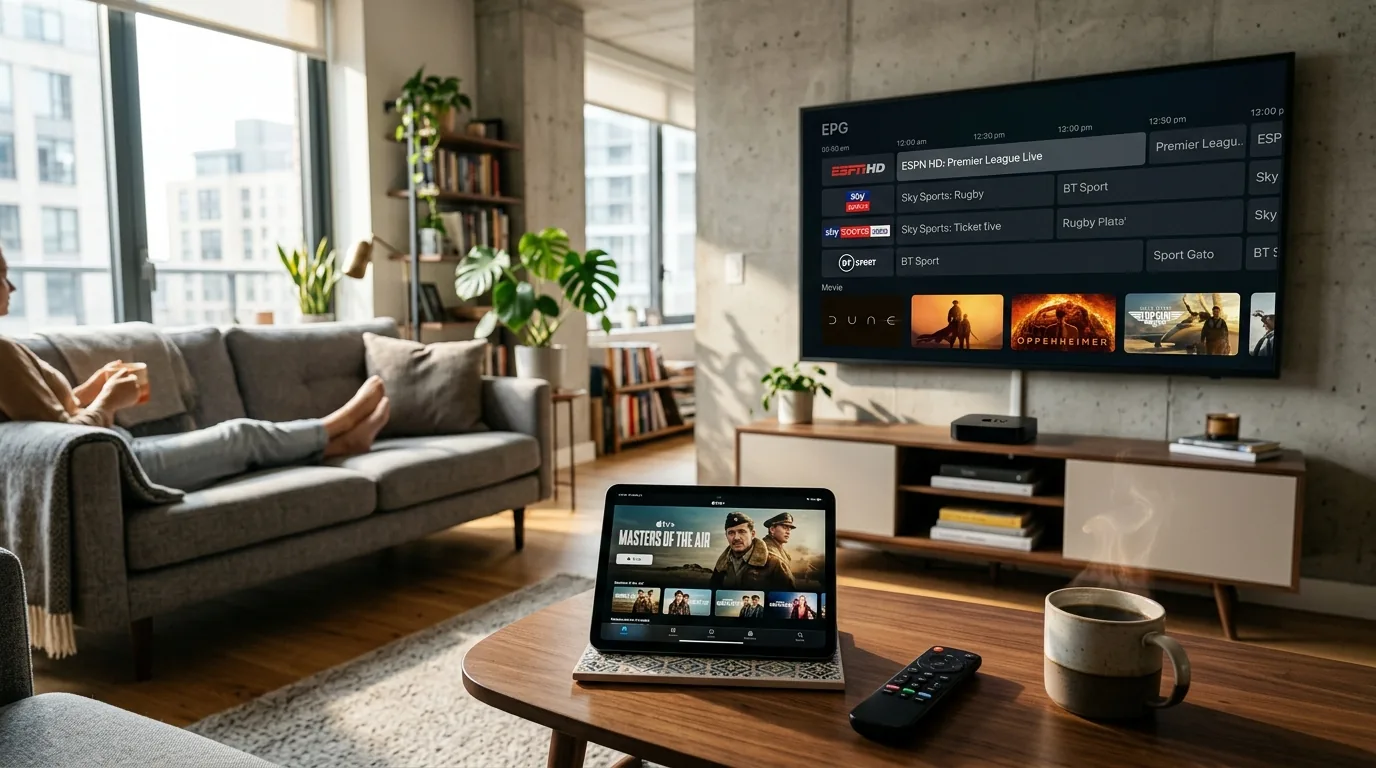
Yes, IPTV technology is 100% legal in the United States. IPTV is simply an internet transmission standard used by major providers from YouTube TV to international streaming networks. Media player applications (like TiviMate, IPTV Smarters, and VLC) are completely legal under the Supreme Court’s Betamax Doctrine. Under US federal law, copyright liability governs unauthorized commercial distribution, which is why legitimate digital services operate under statutory 17 U.S.C. § 512 Safe Harbor provisions with registered DMCA compliance procedures.
What is IPTV? Separating Protocol from Content
To understand the legal landscape, one must first recognize that "IPTV" (Internet Protocol Television) is not a brand, a company, or a piracy syndicate. It is an open technical networking protocol that delivers digital television signals over internet protocol suites (TCP/IP and UDP) rather than traditional coaxial cables, terrestrial antennas, or satellite downlinks.
When you stream a live football game on YouTube TV, Hulu + Live TV, ESPN+, or Peacock, you are actively utilizing IPTV technology. As documented in the Federal Trade Commission (FTC) Consumer Guide to Streaming Media, internet protocol transmission is an established, lawful alternative to legacy pay-TV services.
The United States Legal Spectrum: How Federal Law Evaluates Each Component
Federal statutes distinguish clearly between transmission technologies, decoder software, intermediary conduits, and commercial infringement:
| Component / Layer | Technical Examples | Legal Status in USA | Governing Legal Precedent |
|---|---|---|---|
| 1. Transmission Technology | HLS (.m3u8), RTSP, UDP, MPEG-TS | 100% Legal | FCC Internet & Telecom Standards |
| 2. Media Players & Decoders | TiviMate, IPTV Smarters, VLC Media Player | 100% Legal | Sony Corp v. Universal Studios (Betamax Doctrine) |
| 3. Intermediary Indexing | Playlist gateways, M3U routing proxies | Protected under Safe Harbor | 17 U.S.C. § 512(c) Digital Millennium Copyright Act |
| 4. Commercial Re-broadcasting | Decryption of commercial feeds for illicit profit | Illegal (Commercial Infringement) | Protecting Lawful Streaming Act (PLSA) 2020 |
The Betamax Doctrine: Why TiviMate and Media Players are 100% Legal
In 1984, the United States Supreme Court delivered one of the most foundational rulings in technology history: Sony Corp. of America v. Universal City Studios, Inc. (464 U.S. 417), widely known as the Betamax Decision.
Hollywood film studios had sued Sony, alleging that manufacturing the Betamax video tape recorder enabled consumers to record copyrighted broadcasts and constituted contributory copyright infringement. The Supreme Court ruled decisively in favor of Sony, establishing that:
"The sale of copying equipment, like the sale of other articles of commerce, does not constitute contributory infringement if the product is widely used for legitimate, unobjectionable purposes. Indeed, it need merely be capable of substantial noninfringing uses."
This bedrock principle protects modern media player software like TiviMate, IPTV Smarters, Kodi, and VLC. Media decoders do not store, host, or broadcast copyrighted content. They are neutral digital tools capable of substantial non-infringing uses (such as playing home videos, educational streams, and public broadcasts), a position vigorously defended by civil liberties organizations like the Electronic Frontier Foundation (EFF).
17 U.S.C. § 512: How Statutory Safe Harbor Governs Digital Intermediaries
Under Section 512 of Title 17 of the United States Code (enacted under the Digital Millennium Copyright Act), online service providers and digital intermediaries receive immunity from copyright infringement claims provided they maintain strict safe-harbor compliance:
The intermediary does not initiate the transmission, does not select the recipient, and does not alter the content transmitted across network nodes.
The service publishes designated contact channels where verified rights holders can submit formal takedown notices containing all statutory 17 U.S.C. § 512(c)(3) declarations.
Upon receipt of an official notice, the provider acts expeditiously to remove or disable access to the reported stream URLs within 24 hours.
You can review our complete statutory compliance framework on our official DMCA Copyright Notice & Takedown Procedure and read our transparent Legal Disclaimer.
The Protecting Lawful Streaming Act (PLSA): What It Actually Says
In December 2020, the United States Congress passed the Protecting Lawful Streaming Act as part of the Consolidated Appropriations Act. Cable industry trade groups frequently cite this law in threatening public service announcements to frighten home cord-cutters.
However, reading the statutory text of the PLSA reveals that individual household viewers are explicitly exempt. The legislation amended federal law to make commercial, large-scale pirate services a felony. To violate the statute, an entity must:
- Be primarily designed or provided for the purpose of streaming unauthorized copyrighted works commercially;
- Have no commercially significant purpose or use other than streaming copyrighted material; or
- Be intentionally marketed by or at the direction of that person for use in streaming copyrighted content.
Federal prosecutors specifically confirmed during congressional testimony that ordinary consumers streaming media in their homes are not subject to felony liability under the PLSA.
4 Essential Safety Rules for American Consumers in 2026
1. Use Official Payment Gateways
Never send payment through anonymous wire transfers or off-shore crypto brokers that ask for private keys. Trust services that accept verified Stripe credit/debit card checkouts with bank-grade fraud protection.
2. Use Private DNS Resolvers
American telecom providers log DNS query histories and sell browsing telemetry. Setting your router or Firestick to Cloudflare (1.1.1.1) prevents ISP logging of your entertainment habits.
3. Insist on a Free Trial
Never commit to long-term plans upfront. Reliable providers always offer a 24-hour risk-free trial so you can evaluate channel quality, audio sync, and EPG accuracy on your hardware.
4. Check for Real Customer Support
Rogue operations vanish overnight. Compliant providers maintain active WhatsApp technician helpdesks, responsive email ticket queues, and transparent management consoles.
Continue Learning About Streaming in the USA:
Frequently Asked Questions
Is IPTV technology legal under United States federal law?
Yes, 100%. Internet Protocol Television (IPTV) is simply an international telecommunications networking protocol. Standard domestic streaming providers—including YouTube TV, Hulu + Live TV, and Sling TV—are all IPTV systems. The underlying technology transmission standard is completely legal under US federal communications law.
Are media players like TiviMate, IPTV Smarters, and VLC legal to use?
Yes, entirely legal. Under the historic 1984 Supreme Court "Betamax Doctrine" (Sony Corp. v. Universal City Studios), software and hardware capable of substantial non-infringing uses are fully protected. Media players are empty decoders; they do not contain, host, or distribute copyright media on their own.
What is 17 U.S.C. § 512 Safe Harbor, and how does it apply to IPTV?
Section 512 of the Digital Millennium Copyright Act (DMCA) provides statutory immunity from copyright liability to online intermediaries and service providers that act as transmission conduits, provided they maintain a registered DMCA compliance agent and expeditiously disable access to infringing material upon receiving statutory notification.
What is the Protecting Lawful Streaming Act (PLSA) of 2020?
The PLSA is a federal statute that elevated commercial piracy operations to felony status. Crucially, the law explicitly targets commercial bootleggers and unauthorized re-broadcasters who commercially profit from pirating content—it does not target individual cord-cutters viewing streams in their homes.
Can a residential customer be fined or prosecuted for streaming IPTV at home?
Under US federal law, copyright enforcement is directed at commercial distributors, re-streamers, and pirate network operators, not individual household viewers. There is zero historical precedent in the United States for criminal prosecution of an individual home user for watching a stream.
How can American consumers verify that an IPTV service is safe?
Check for four essential trust signals: (1) Secure, standard payment processing via Stripe credit/debit cards rather than anonymous wire transfers; (2) A designated DMCA takedown procedure and published legal disclaimer; (3) Live customer support via WhatsApp or ticketing; and (4) Transparent 24-hour trial options.
Ready to Upgrade Your TV Experience?
Enjoy smooth IPTV streaming on all your devices with fast setup and reliable performance.